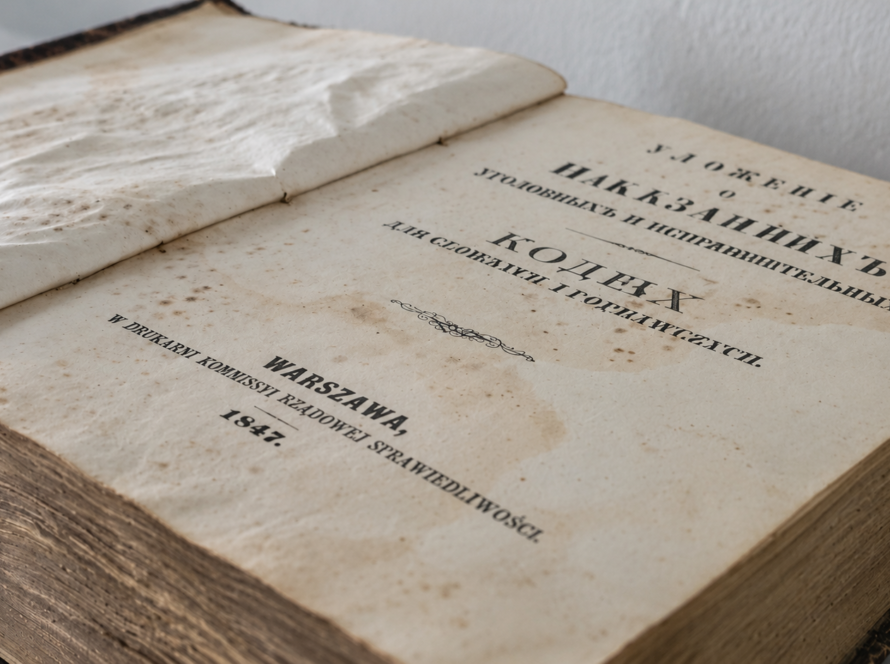
Not every good book needs to be read again. Some we finish, put back on the shelf and remember fondly. Others stay with us in a different way. After a few months we look for a particular passage; after a few years we open the book again. Sometimes we start at the beginning, sometimes we read only a few pages. The text has not changed, but the reader has. That is why rereading the same book can become an entirely new experience.
The same book, a different person
A book read at twenty can mean something else ten or thirty years later. Between one reading and the next come experiences we did not have before. Relationships, work, the places we live, our knowledge and our view of other people change. A passage that once seemed central may now pass almost unnoticed. A sentence we skipped the first time may suddenly hold us for several minutes. The author has not rewritten it. We are reading it from a different place in life.
Notes let us meet an earlier version of ourselves
Returning to a book in which we once made notes is a special experience. Underlining from fifteen years ago may now seem baffling. Elsewhere we find an exclamation mark, a question mark or a few words in the margin. Sometimes we still agree with the person who wrote them; sometimes we do not. The book then holds more than the author’s text. It preserves a trace of a previous reading and of who we were at the time. Notes need not be treated as damage to a pristine copy. In a private library, they can become part of its history.
Underlining has its own chronology
If we return to the same book repeatedly, each reading can leave another layer: a different pencil, changed handwriting, a date in the margin, a new remark beside a sentence underlined years earlier. Together they form a curious record of a conversation with the same text at different points in life. A used copy can therefore become more precious to its owner than an identical book in perfect condition. A new copy contains the same words, but not the shared history.
Some books we read only in fragments
Returning to a book does not always mean reading it again from the first page to the last. In time, some books become almost like places. We know where to find the passage we need. We open a few pages, read them and put the book back. An art book can be browsed for ten minutes, a volume of poetry opened at one poem, an essay reread without revisiting the whole collection. A book does not stop being used because we no longer read it in a straight line. Sometimes this is precisely when it truly becomes part of our library.
Rereading also tests memory
After several years we may be certain that we remember a book well: a character, the atmosphere, a few events, perhaps the ending. Rereading quickly shows how much has disappeared. Some passages seem entirely new; others differ from the way we remembered them. A detail that lived large in our memory may occupy only a few sentences on the page. Memory does not preserve a text unchanged. It selects, shifts the emphasis and connects what we read with later experiences. Returning to a book is therefore a meeting with both the text and our memory of it.
Books can wait for the right moment
Not every book reaches us at the right time. We may read an acclaimed novel and feel little, set an essay aside after a dozen pages, or fail to understand why a friend loves a book. Years later the same text may speak to us very differently. That does not mean we read it badly before. We may have lacked the knowledge, experience or simple interest that came later. A book that did not hold us the first time need not leave the library immediately. Sometimes it is worth letting it stay.
A private library preserves the story of our reading
Our shelves hold books read at different stages of life: early important novels, books linked to study or work, titles discovered through particular people, authors we followed for years and then left behind, books bought while travelling and those that accompanied difficult or especially happy times. Not all of them matter equally today, but together they show a path. A private library can be more than a selection of the books we currently consider best. It also keeps the history of how our reading has changed.
A book passed on begins another story
A book kept within a family offers a particular kind of return. A copy once read by a parent or grandparent reaches another reader years later. The text is the same, but now it carries traces of the earlier reader: underlining, a dedication, a signature, a date or a note in the margin. We read both the author and a person’s presence. We may never know why a sentence was marked, yet knowing that someone stopped there can change how we read it. The book begins to connect several stories of reading.
Not every book must stay forever
Returning to books does not oblige us to keep everything. A library needs selection too. Some books we do not want to revisit; others are no longer useful or would serve someone else better. Choosing what stays can give the remaining books greater meaning. The aim is not a collection made only of masterpieces. It is to leave room for the books whose story with us is not yet over.
A good book does not always end on its last page
Reading has a clear beginning; its ending is harder to locate. We may close a book and still remember one sentence years later. We may return after a decade and discover a text we barely noticed the first time. We may pass our copy to someone else and let it acquire new traces. Some books we read once. Others accompany us much longer.